



The American Evolution: Navigating the Future of the Subaru WRX in 2026
The automotive landscape is undergoing a seismic shift, driven by tightening emissions standards and the inexorable march toward electrification. In Japan, the iconic Subaru WRX—a symbol of rally-bred performance and all-wheel-drive prowess—is facing an existential crossroads. Reports indicate that production of the mainstream WRX models in its home market is slated to cease by mid-2026, a casualty of stringent noise and environmental regulations. This development has sent ripples of concern through the passionate enthusiast community, particularly in the United States, where the WRX has cultivated a fiercely loyal following for over two decades.
While Subaru of America has remained characteristically tight-lipped regarding the implications for its domestic lineup, the writing on the wall suggests a period of significant transition. The core of the issue lies in the conflict between the WRX’s celebrated turbocharged Boxer engine and the increasingly stringent environmental mandates that govern vehicle production. As manufacturers worldwide grapple with the challenge of balancing performance with sustainability, Subaru finds itself at a critical juncture, one that could redefine the very essence of the WRX identity.
A Tale of Two Markets: Understanding the Japanese Predicament
To fully appreciate the gravity of the situation, one must first understand the regulatory environment that has brought the Japanese WRX to the brink. In its home market, Subaru has primarily offered two variants: the WRX S4, a well-equipped sedan featuring Subaru’s Lineartronic CVT (Continuously Variable Transmission), and the high-performance WRX S4 STI Sport, a more track-focused iteration that elevates the WRX’s sporting credentials. Both models are powered by Subaru’s renowned 2.4-liter turbocharged horizontally opposed four-cylinder engine, a powerplant celebrated for its unique character and robust torque delivery.
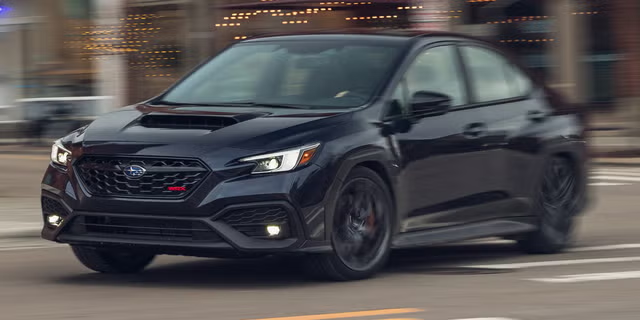
However, this very engine, the heart and soul of the WRX experience, has become the focal point of regulatory scrutiny. According to industry sources and Japanese automotive publications, the noise and emissions output of the turbocharged Boxer engine now falls short of the latest Japanese environmental standards. These regulations, among the strictest in the world, are designed to curb vehicular pollution and reduce noise pollution in urban environments. For automakers like Subaru, compliance is not merely a matter of preference but a legal imperative.
The imminent cessation of production in Japan, confirmed by announcements on Subaru’s Japanese consumer website, signals the end of an era for these specific WRX variants. Orders for the WRX S4 are reportedly set to close in May 2026, with the S4 STI Sport variant scheduled for discontinuation shortly thereafter. This decision underscores the difficult trade-offs manufacturers must make in the modern automotive landscape, where heritage and performance often collide with regulatory reality.
The American Context: A Different Regulatory Climate
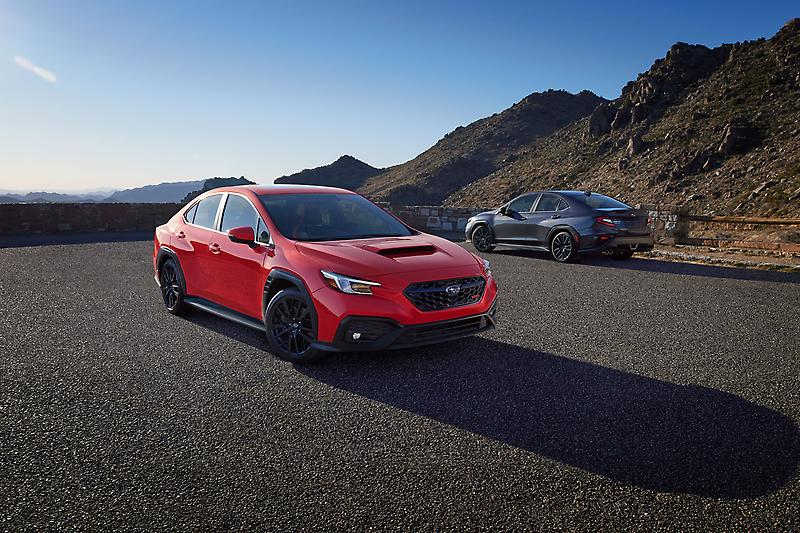
The question that inevitably arises for American enthusiasts is whether this regulatory pressure will extend to the United States market. The answer, at least for the immediate future, appears to be a resounding “no.” The regulatory frameworks governing vehicle emissions and noise levels differ significantly between Japan and the United States. The Environmental Protection Agency (EPA) in the U.S. operates under a different set of standards, and while these standards are continuously evolving, they have not yet reached the same level of stringency as those in Japan, particularly concerning the specific parameters that are reportedly challenging the WRX’s current configuration.
This divergence in regulatory environments creates a bifurcated reality for the WRX. While its Japanese counterpart is being phased out due to compliance concerns, the U.S.-market WRX, particularly the manual transmission models, remains a fixture in Subaru of America’s lineup. However, the absence of official confirmation from Subaru of America regarding the long-term future of the U.S. WRX only amplifies the uncertainty surrounding the model. When pressed for comment, a company spokesperson offered no new information, a silence that speaks volumes in the rumor-laden automotive press.
The implications of this silence are manifold. It suggests that Subaru is carefully evaluating its options, weighing the costs and benefits of various strategies. The company’s approach to the U.S. market will ultimately determine the trajectory of the WRX in North America. Will Subaru find a way to bring the WRX into compliance with future U.S. regulations, perhaps through technological innovation or powertrain modifications? Or will the model ultimately succumb to the same pressures that are forcing its Japanese brethren into retirement?
Exploring the Technological Pathways to Compliance
The challenge facing Subaru in the U.S. market is not insurmountable, but it will require strategic innovation and a willingness to adapt. The core of the issue is the 2.4-liter turbocharged Boxer engine, a unit that has defined the WRX’s character for years. To meet future emissions standards, Subaru will likely need to implement significant technological advancements.
One potential pathway involves the hybridization of the powertrain. By incorporating an electric motor and battery system, Subaru could reduce the overall emissions of the WRX while potentially enhancing its performance characteristics. Hybrid technology has proven effective in other performance vehicles, offering benefits such as improved fuel efficiency, lower emissions, and enhanced torque delivery. However, the integration of a hybrid system would inevitably alter the WRX’s driving dynamics and character, a prospect that may not appeal to all enthusiasts who cherish the raw, unfiltered experience of the current model.
Another avenue to explore is the development of a new generation of turbocharged Boxer engine. Subaru has a long history of innovation in Boxer engine technology, and it is conceivable that the company could engineer a next-generation unit that meets future emissions standards without compromising performance. This would likely involve advanced combustion technologies, such as direct injection and variable valve timing, as well as sophisticated exhaust aftertreatment systems. Such an undertaking would require substantial investment in research and development, but it could ensure the WRX’s survival in its traditional form.
The most dramatic, yet increasingly probable, solution is a complete shift toward electrification. The automotive industry is rapidly moving in this direction, with many manufacturers committing to a fully electric future. Subaru has already taken steps in this direction with the introduction of its Solterra, a battery-electric SUV developed in partnership with Toyota. It is plausible that Subaru could eventually introduce a fully electric WRX, one that leverages its expertise in all-wheel-drive technology to deliver an exhilarating driving experience.
The EV Revolution: A New Identity for the WRX?
The prospect of an all-electric WRX raises fascinating questions about the model’s identity. For decades, the WRX has been synonymous with the turbocharged Boxer engine, a unique configuration that has contributed significantly to its distinctive character. An electric WRX would represent a fundamental departure from this heritage. However, it could also unlock new performance possibilities. Electric motors offer instant torque delivery and the potential for precise torque vectoring, capabilities that could make an electric WRX even more capable on road and track than its gasoline-powered predecessors.
The emotional attachment of enthusiasts to the traditional WRX identity is a significant factor that Subaru must consider. Many fans are drawn to the WRX precisely because of its unique engineering and its connection to Subaru’s rally racing heritage. A fully electric WRX would undoubtedly alienate some of these purists. However, the automotive landscape is changing rapidly, and the next generation of performance enthusiasts may embrace the idea of an electric WRX as the natural evolution of the model.
Subaru’s decision will ultimately depend on a complex calculus of market forces, regulatory pressures, and technological feasibility. The company’s success in navigating this transition will depend on its ability to balance the demands of compliance with the desires of its loyal customer base.
The U.S. Lineup in Transition: What to Expect
While the long-term future of the WRX remains uncertain, the current U.S. lineup offers some clues about the company’s near-term strategy. In addition to the standard manual transmission WRX, Subaru of America currently offers two CVT-equipped variants: the WRX tS and the WRX GT. The tS, which slots below the GT in the lineup, features Subaru’s StarDrive Intelligent Dual Clutch Transmission and a suite of performance-oriented enhancements, including a retuned suspension and STI-tuned chassis components. The top-tier WRX GT takes these enhancements further, offering Brembo brakes, Recaro sport seats, and a performance-tuned suspension with electronically adjustable dampers.
These CVT-equipped models are essentially the American counterparts to the WRX S4 variants that are being discontinued in Japan. Their continued availability in the U.S. market suggests that Subaru has a different strategy in mind for North America. However, the existence of the WRX STI S#, a limited-production manual-transmission model revealed at the Tokyo Auto Salon, indicates that Subaru has not abandoned its commitment to enthusiast-focused vehicles. The STI S# represents a celebration of the WRX’s heritage, offering a more powerful engine and enhanced performance characteristics in a manual-transmission package.
The timing of the WRX STI S# reveal is notable, suggesting that Subaru may be planning a phased transition for the U.S. market. It is possible that the STI S# will serve as a halo model, a testament to the WRX’s performance legacy, while Subaru works on developing a next-generation WRX that can meet future regulatory requirements. The possibility of a new manual-transmission option being reintroduced in the next generation, as some industry speculation suggests, would be a welcome development for many American enthusiasts.
A Look Ahead: The Future of Rally-Inspired Performance
The next few years will be critical for the Subaru WRX and for Subaru as a company. The automotive industry is in the midst of its most significant transformation in over a century, and Subaru, like all manufacturers, must adapt to survive and thrive. The WRX has been a cornerstone of Subaru’s identity for decades, a symbol of its rally racing heritage and its commitment to all